



By Kenneth Asiimwe
A quiet but unstoppable shift is underway in global mining. Mega-projects are taking longer to launch, costing more to finance, and facing greater pushback to operate. This is not a temporary slump. It is a structural squeeze, and it is forcing the world to rethink how minerals will be sourced in the next decade.
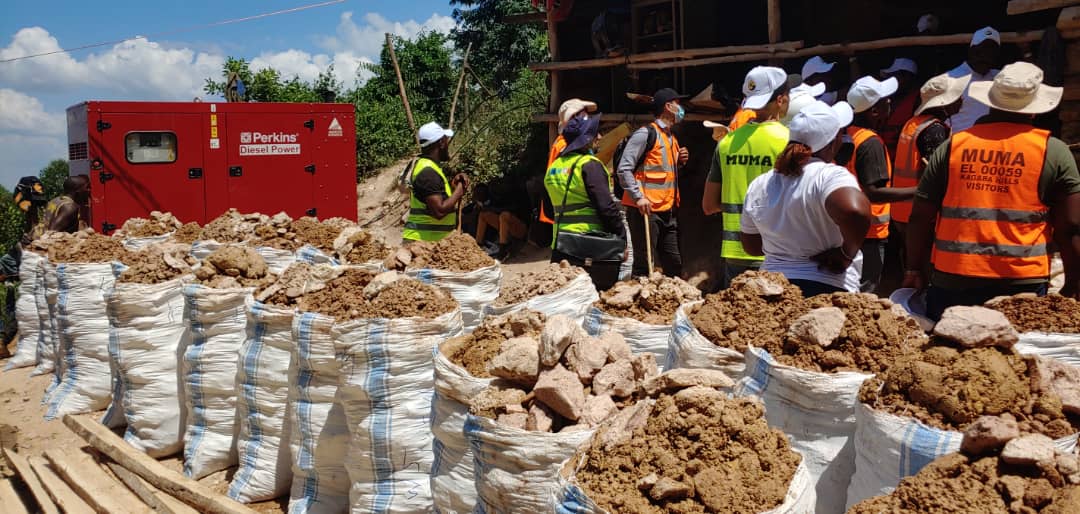
As the head of an organization representing tens of thousands of artisanal and small-scale miners, I see this shift from the frontline. Our sector, long dismissed as “informal,” is not just persisting. It is expanding, organizing, and increasingly becoming part of the supply conversation for critical minerals.
This is not about the end of large-scale mining. It is about the limits of a model that is struggling to scale fast enough for today’s mineral demand.
Shifting landscape
First, the economics are tightening. Many of the easiest deposits have already been exploited. New discoveries are often deeper, lower grade, and farther from infrastructure. That raises capital costs, raises operating risk, and stretches payback periods. In an age where capital is more cautious and ESG scrutiny is higher, fewer investors are comfortable with long, uncertain timelines.
Second, the social license environment has changed. In many jurisdictions, communities are more informed, more organized, and more willing to resist projects they perceive as unfair or environmentally destructive. Whether that resistance is justified or not, the cost of conflict – and the reputational damage – can become prohibitive.
Third, permitting and compliance timelines have expanded. Environmental assessments, legal processes, and regulatory approvals can take years longer than they used to, especially for greenfield mega-projects. This is a serious mismatch with rising demand for minerals needed in energy, infrastructure, and technology.
An active open-pit mining operation
Fourth, the energy transition has created urgency. The world needs copper, lithium, cobalt, nickel, and other inputs at scale, and it needs them sooner than many new mega-mines can realistically deliver. The pipeline is not empty, but it is slower than the demand curve.
The ASM alternative
The ASM model operates differently. We work smaller deposits, scattered deposits, and deposits that are uneconomic for massive machinery. We rely on local knowledge and collective effort, not billion-dollar balance sheets. We are socially embedded because we are not visitors in these landscapes; we live here.
But let’s be clear: ASM also has real problems in many places – safety risks, environmental harm, poor recovery, child labor in some contexts and smuggling.
That is exactly why organization matters.
When ASM is structured through cooperatives, enforced standards, training, and transparent market access, it becomes a legitimate and scalable partner in responsible sourcing.
While one large project can take a decade to reach full production, thousands of small operations can adapt quickly if they have the right support: licensing that works, geological information, extension services, safer technologies, traceability systems and fair offtake agreements.
For too long, the debate has been framed as “how to formalize artisanal miners into a system designed for giants.” That framing is becoming obsolete.
The better question is how capital, technology, and market access can integrate into a grounded, community-rooted supply model while raising standards and accountability.
We are already seeing early signals of this realignment. Battery and manufacturing supply chains are exploring direct engagement with organized producer groups.
Traceability tools are being piloted. Logistics corridors are being discussed with mineral aggregation in mind. The direction is clear: responsible sourcing will increasingly require working with distributed production, not only mega-sites.
If Uganda wants to benefit from this shift, the priorities are practical: make licensing and cooperative formation simpler, faster, and enforceable; invest in training, safety and environmental compliance as core production infrastructure plus support modular processing and value addition to reduce raw exports and smuggling.
Also we need to build credible traceability and buying systems that reward compliant producers with better prices and create financing pathways for equipment that improves recovery and reduces environmental harm.
Strategic collaboration
To mining companies, investors, and consuming industries: the risk is no longer simply in engaging with ASM. The risk is in pretending ASM does not exist, and then acting surprised when supply chains face legitimacy, traceability and community backlash.
We invite partnership not as charity, but as strategic necessity.
Invest in capacity. Co-design traceability. Finance modular processing. Buy directly from certified cooperatives and compliant producer networks.
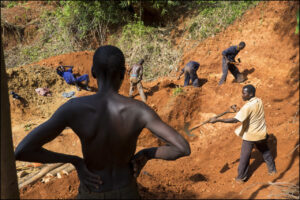
Artisanal mining is still dominant in Uganda
The minerals the world needs are beneath our feet. They can be extracted through conflict and short-term exploitation or through partnership, fairness and shared value.
The credibility of the energy transition will depend on which path supply chains choose.
Large-scale mining is not disappearing. But the era of pretending it is the only serious model is ending. The future of mining will be more distributed, more accountable, and more connected to the people and places where minerals come from.
The writer, is the CEO, Uganda Association of Artisanal and Small Scale Miners (UGAASM). Email: kenasiimwe@gmail.com